

Quick Answer
The best pressure cooker for most home cooks is the Presto 01362 6-Quart Stainless Steel Pressure Cooker — Made-in-USA stainless steel at 15 PSI — the time-tested home pressure cooker that lasts decades. On a tighter budget, the T-Fal T-fal Clipso Stainless Steel Stovetop Pressure Cooker delivers most of the same performance for less.
Stovetop pressure cookers cook faster than Instant Pots, last decades longer, and don't take up counter space. The trick is buying one with a reliable pressure regulator and a gasket you can actually replace. Here are the three we'd buy.
How We Picked These
For this pressure cooker guide, we applied the framework laid out in our Editorial Policy: we evaluate materials and construction first, then weight long-term durability heavily — six-month and one-year owner-review patterns matter more than first-week impressions. We screened out products with documented reliability complaints, missing or hard-to-claim warranty support, and no-name brands without long-term service infrastructure. The picks below are the ones we'd recommend to a friend.
1. Best Overall: Presto 01362 6-Quart Stainless Steel Pressure Cooker
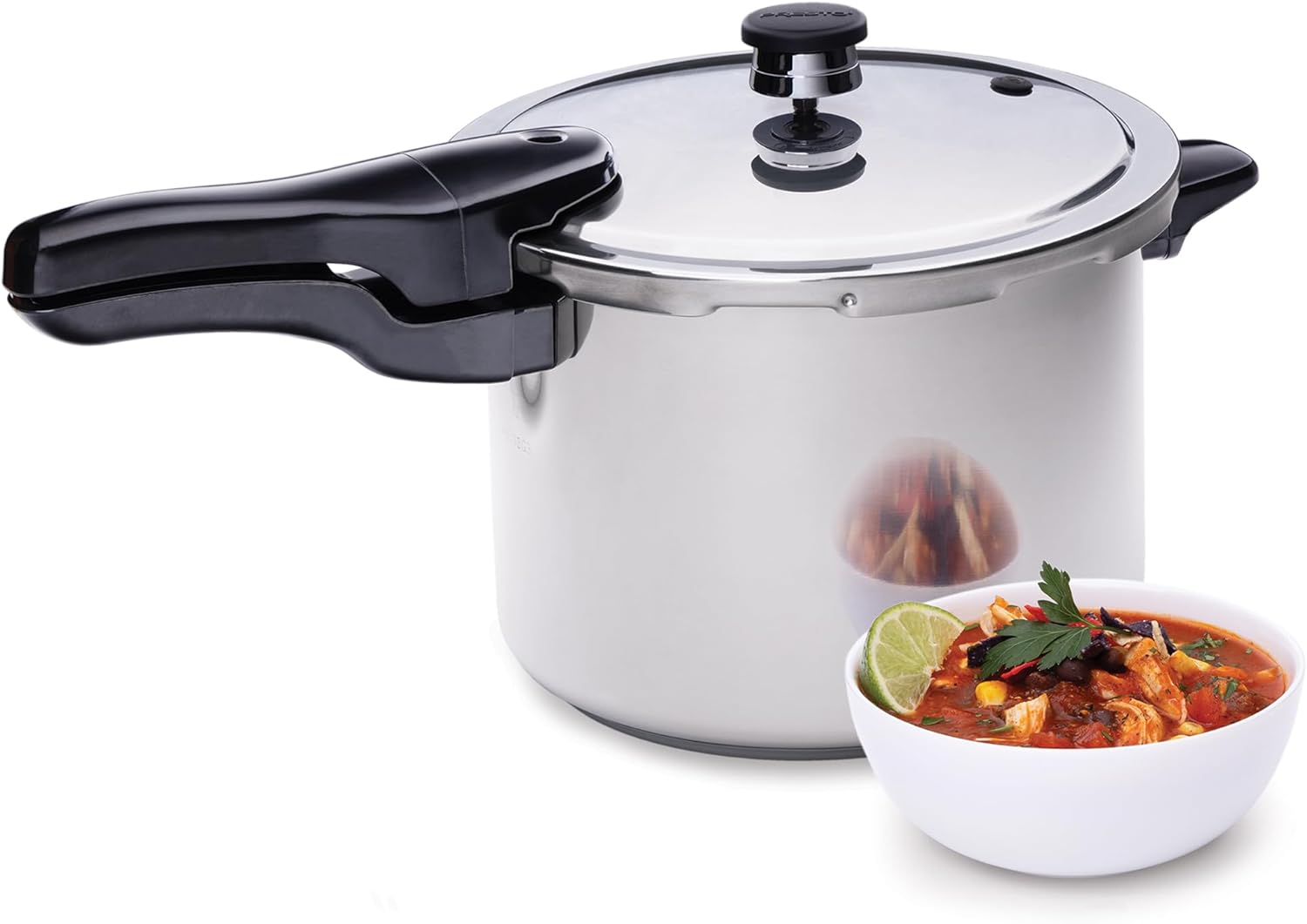
Presto 01362 6-Quart Stainless Steel Pressure Cooker
Presto
- 15 PSI for fastest cook times
- Tri-clad stainless steel base
- Heavy-duty pressure regulator
- Made in USA
Why we picked it: Made-in-USA stainless steel at 15 PSI — the time-tested home pressure cooker that lasts decades.
2. Best Value: T-Fal T-fal Clipso Stainless Steel Stovetop Pressure Cooker

T-fal Clipso Stainless Steel Stovetop Pressure Cooker
T-Fal
- One-hand lid operation
- Visible pressure indicator
- 5 safety mechanisms
- Induction compatible
Why we picked it: One-hand lid open/close + visible pressure indicator — the friendliest pressure cooker for new users.
3. Best Premium: Hawkins Stainless Steel Pressure Cooker

Hawkins Stainless Steel Pressure Cooker
Hawkins
- Inside-fitting lid (stronger seal)
- Heavy-gauge stainless steel
- Long-handle design
- Available in multiple capacities
Why we picked it: Indian-style inside-fitting lid is famously durable — Hawkins is the home pressure cooker in millions of kitchens worldwide.
The Comparison Table
| Pick | Brand | Product | Key spec |
|---|---|---|---|
| Best Overall | Presto | Presto 01362 6-Quart Stainless Steel Pressure Cooker | 15 PSI for fastest cook times |
| Best Value | T-Fal | T-fal Clipso Stainless Steel Stovetop Pressure Cooker | One-hand lid operation |
| Best Premium | Hawkins | Hawkins Stainless Steel Pressure Cooker | Inside-fitting lid (stronger seal) |
What to Look For
PSI rating determines cook times. Most home pressure cookers run at 15 PSI — the standard for the published cook times you'll find online. Some budget units run at 10–12 PSI, which means 30–50% longer cook times. Always check the spec.
Stainless steel beats aluminum. Aluminum pressure cookers (cheap older models) react with acidic foods like tomatoes and pit over time. Stainless steel with an aluminum core handles everything, lasts decades, and is dishwasher-safe.
Gasket replaceability is the long-term spec. The silicone gasket that seals the lid is a wear part — replace it every 1–2 years of regular use. Major brands (Presto, Hawkins, T-fal) sell replacement gaskets for $5–10. Off-brand units often don't have replacements available, which means the cooker becomes a $80 doorstop after the first gasket fails.
Stovetop vs. electric: why this roundup is stovetop-only
This page covers stovetop pressure cookers deliberately — the electric side of the category is the Instant Pot's territory, and our Instant Pot guide and comparison handle it. The stovetop cooker's case is pressure and speed: it runs at a true 15 PSI versus the roughly 10-12 PSI most electrics reach, which cooks 20-30% faster and sears harder before the lid goes on, in the same pot, over real burner heat. There's no motherboard to fail, nothing to descale, and a good stainless model like the Presto or T-fal Clipso is a 30-year tool.
What the electric buys instead is unattended operation — walk-away timing, keep-warm, no burner-babysitting. The honest split: households that pressure-cook rice, beans, and weeknight staples on autopilot are happier electric; cooks who want restaurant-speed stocks, braises, and canning-adjacent capacity are happier with stovetop's power. Plenty of serious kitchens run one of each.
Natural release vs. quick release, and when each matters
How you release pressure is a cooking decision, not a convenience one. Quick release — opening the valve immediately — stops cooking on a dime, which is what vegetables, seafood, and pasta need to avoid mush. Natural release lets the pot cool and depressurize on its own over 10-20 minutes, and that window is functional: meat fibers relax and reabsorb moisture instead of seizing, which is why braises, stocks, and anything with big protein cuts come out noticeably juicier naturally released. The rule of thumb: quick for delicate, natural for meat and beans, and a 10-minute natural-then-quick hybrid for everything between.
Two safety habits cover the category's entire risk profile: never force the lid before pressure fully drops (modern interlocks physically prevent it — don't fight them), and keep the gasket clean and replace it every year or two, since the silicone ring is the only wear part on a stovetop cooker. Tilt the lid away from you when opening; the steam cloud is the one genuine hazard left in a modern unit.
Sizing, altitude, and what a pressure cooker genuinely does best
Buy bigger than the recipe: a pressure cooker can only be filled two-thirds (half for beans and grains, which foam), so a '6-quart' is really a 4-quart of usable capacity, and stocks want the room. Six quarts is the family default; the Hawkins-style smaller cookers earn their place for daily dal-and-rice cooking where speed matters more than volume. Altitude cooks should know the physics: water boils cooler up high, and pressure cooking is the fix — but add about 5% cook time per 1,000 feet above 2,000, since even at 15 PSI the internal temperature runs slightly lower than at sea level.
Where the tool genuinely shines, beyond the marketing: dried beans from bag to tender in 35 minutes with no soak; stocks that extract in 45 minutes what a simmer does in 4 hours (the sealed environment stops evaporation, so collagen dissolves into a stock that gels hard); tough braising cuts — shanks, oxtail, chuck — at weeknight speed; and whole grains like farro and barley on autopilot timing. What it does badly is also worth knowing: anything that needs evaporation and browning during cooking (risotto purists, look away), delicate fish, and green vegetables beyond the 2-minute mark. Pair it with the Dutch oven — the slow, open-lid counterpart — and the two cover the entire braising spectrum.
Buyer Scenario Decision Matrix
Stop comparing specs. Start with what you're actually doing, then the right product is obvious:
| Your Situation | Buy This | Skip This | Why |
|---|---|---|---|
| Most people — daily use, no compromises | Presto 01362 6-Quart Stainless Steel Pressure Cooker | Premium-only sets you won't grow into | 15 PSI for fastest cook times |
| Budget-conscious or first-time buyer | T-Fal T-fal Clipso Stainless Steel Stovetop Pressure Cooker | Premium upgrade you may not need yet | One-hand lid operation |
| Heavy daily use, splurge, or buy-once-keep-forever | Hawkins Stainless Steel Pressure Cooker | Cheaper sets — you'll outgrow them | Inside-fitting lid (stronger seal) |
Bottom Line: Which Should You Buy?
For most people: the Presto 01362 6-Quart Stainless Steel Pressure Cooker. Made-in-USA stainless steel at 15 PSI — the time-tested home pressure cooker that lasts decades.
On a budget: the T-Fal T-fal Clipso Stainless Steel Stovetop Pressure Cooker. One-hand lid open/close + visible pressure indicator — the friendliest pressure cooker for new users.
Worth the splurge: the Hawkins Stainless Steel Pressure Cooker. Indian-style inside-fitting lid is famously durable — Hawkins is the home pressure cooker in millions of kitchens worldwide.
Ready to buy?
Jump straight to our top picks on Amazon — prices shown at click-through.
Frequently Asked Questions
Stovetop pressure cooker vs Instant Pot — which is better?
Stovetop pressure cookers cook 20–30% faster (higher PSI), last 20+ years, and don't take counter space. Instant Pots are more convenient (set-and-forget) and combine slow cooking, rice cooking, and sauté in one device. Choose stovetop for raw cooking speed and durability; choose Instant Pot for convenience.
Is a Presto pressure cooker safe?
Yes — they've been making them since 1905 with an excellent safety record. Modern stovetop pressure cookers (Presto 01362, Hawkins, T-fal) have multiple redundant safety mechanisms: pressure regulator, safety vent, lockable lid. The old horror stories about exploding pressure cookers are from 1950s units with single-point safety designs.
How long does a stovetop pressure cooker last?
20–30 years with normal use. The body is essentially a stainless steel pot — there's nothing to wear out. The gasket needs replacing every 1–2 years ($5–10), and the pressure regulator should be checked annually. With basic maintenance, you can hand down a pressure cooker to your kids.
What is the top-rated pressure cooker for 2026?
Our top-rated pick is the Presto 01362 6-Quart Stainless Steel Pressure Cooker. Made-in-USA stainless steel at 15 PSI — the time-tested home pressure cooker that lasts decades.
Which pressure cooker is best for beginners or a tighter budget?
The best-rated value pick is the T-Fal T-fal Clipso Stainless Steel Stovetop Pressure Cooker — One-hand lid open/close + visible pressure indicator — the friendliest pressure cooker for new users.
Stovetop pressure cooker vs Instant Pot — which is better?
Stovetop pressure cookers cook 20-30% faster (higher PSI), last 20+ years, and don't take counter space. Instant Pots are more convenient (set-and-forget) and combine slow cooking + rice + sauté. Choose stovetop for raw speed and durability; Instant Pot for convenience.
Want to dig deeper? See our guides to Best Instant Pot (2026), Slow Cooker vs Instant Pot: Which Should You Buy?, and Best Slow Cooker (2026).